Dumpster Rental FAQ
Find answers to common questions about roll-off dumpster rentals for residential and commercial projects in Illinois. Understand sizes, rental periods, accepted materials, and requirements before booking.
Frequently Asked Questions
Explore key topics like container sizes, weight limits, rental terms, and permit needs. Get clear details to help plan your rental effectively.
What Affects Cost
The cost of renting a roll-off dumpster depends on container size, debris type, rental length, and location. Typical rentals include delivery, pickup, a standard rental period of about 7 days, and disposal up to a weight allowance. Heavy materials, longer rental periods, and delivery distance add to the total. Call to get a specific quote based on your project details.
Dumpster rentals are priced for the full rental period, which typically lasts about 7 days. Keeping the container longer than the included time adds extra daily charges. Shorter rentals may be prorated depending on the hauler. Rental cost depends on container size, debris type, and rental length. Reach out for a personalized price based on your schedule and project size.
Hauling a single pickup-truck load to a county facility is often less expensive than renting a dumpster. However, projects needing three or more truckloads usually benefit from a dumpster rental, which covers delivery, pickup, and disposal up to the weight allowance. A 10-yard dumpster holds about three to four pickup loads, making it practical for larger cleanouts or construction debris.
We provide dumpster rentals rather than sales, so purchase costs are not available. A 30-yard roll-off rental typically includes about 7 days on site and a weight allowance of roughly 3 to 4 tons. Renting also covers delivery and pickup. Call for a detailed rental quote tailored to your project.
Purchasing a dumpster is outside our rental services. A 20-yard roll-off rental usually includes about 7 days on site and a weight allowance of 2 to 3 tons. This rental includes delivery and pickup. For ongoing or contractor projects, longer-term rentals are available. Contact us to discuss rental options for your needs.
We do not sell roll-off dumpsters, only rent them. Renting is common for homeowners and contractors needing various sizes. Typical rentals include delivery, pickup, and disposal up to a weight allowance for about 7 days. Long-term rentals are available for ongoing projects. Reach out to discuss the right container size and rental period for your situation.
Estate cleanouts typically use containers sized to fit the volume of household items. A 15-yard container is common for smaller homes, while a 20-yard can handle a full house. Rentals include about 7 days on site and roughly 2 tons of disposal. Accepted items include furniture, clothing, books, and household junk. Contact us to find the right size and rental length for your cleanout.
Renting a dumpster for two weeks typically involves the standard one-week rental plus additional days or a two-week package if offered. Extra days add to the total cost, so it’s important to ask if longer rental periods are included in the base price. Contact us to learn about rental length options and pricing for your project.
Sizes and Capacity
A 10-yard roll-off dumpster rental includes about 7 days on site and roughly 1 to 2 tons of disposal. This size measures roughly 12 feet by 8 feet, fitting in a typical driveway. Delivery, pickup, and disposal up to the weight allowance are part of the rental. Heavy debris exceeding the weight limit is charged separately. Contact us for a quote specific to your location and job.
A 12-yard roll-off dumpster rental includes about 7 days on site and a weight allowance of approximately 1 to 2 tons. The rental covers delivery, pickup, and disposal within the weight limit. Heavy debris beyond the allowance is billed separately. Pricing varies based on disposal rates and delivery distance. Please call for a rental quote tailored to your project and location.
A 15-yard roll-off dumpster rental generally includes about 7 days on site and roughly 1 to 2 tons of disposal. Delivery, pickup, and disposal up to the weight allowance are provided. Additional weight is charged separately. Contact us to discuss your project requirements and get a detailed rental quote.
A 20-yard roll-off dumpster rental includes about 7 days on site and roughly 2 to 3 tons of disposal. Delivery, pickup, and disposal within the weight allowance are part of the rental. Any weight over the allowance is charged separately. Call us to find the right container size and rental period for your project.
A 30-yard roll-off dumpster rental typically includes about 7 days on site and a weight allowance of 3 to 4 tons. Delivery, pickup, and disposal within that weight are part of the rental. Excess weight is billed separately. Contact us for a quote based on your project and location.
A 40-yard roll-off dumpster rental usually includes about 7 days on site and roughly 4 to 6 tons of disposal. Delivery, pickup, and disposal within the weight limit are part of the rental. Weight allowances depend on the container and disposal site. Call to discuss your project and receive a rental estimate.
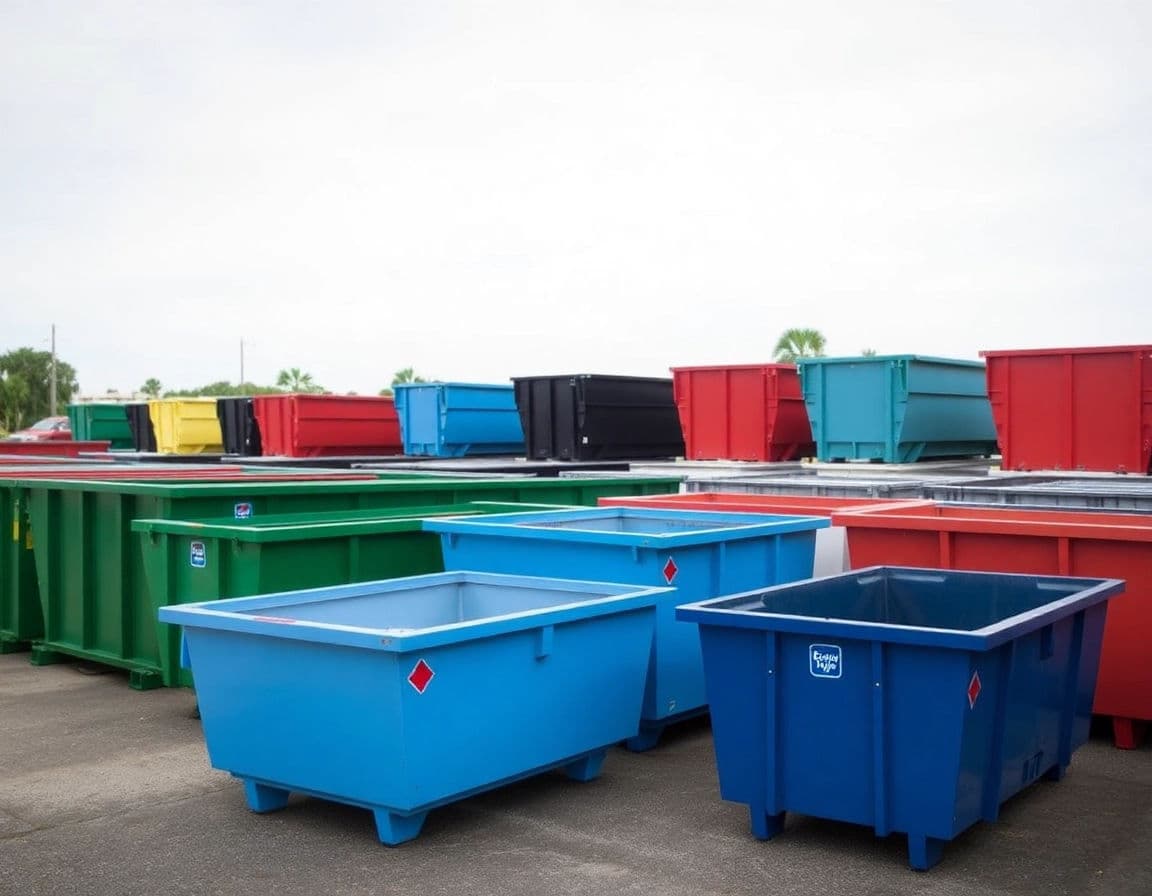
Six roll-off sizes: 10, 12, 15, 20, 30 and 40 cubic yards. The 10- and 12-yard containers are about 12 to 14 feet long and suit small cleanouts; the 15- and 20-yard sizes handle remodels and whole-home cleanouts; the 30- and 40-yard containers, 22 feet long and 6 to 8 feet high, are for construction, demolition and commercial jobs.
A 30-yard container holds about 30 cubic yards of material, which is roughly 9 to 12 pickup-truck loads or around 135 to 180 contractor trash bags. It measures about 22 feet long, 8 feet wide and 6 feet high and usually includes 3 to 4 tons of disposal weight. It fits a whole-house cleanout, a large remodel or a home addition.
Rules: What Goes In, Weight and Permits
The same list applies to every size: hazardous waste and chemicals, wet paint, batteries, tires, asbestos, motor oil and fuel, propane tanks, medical waste, and refrigerators or AC units that still contain refrigerant. Electronics are restricted in many areas. Concrete, dirt and brick go in as a separate heavy-debris load, not mixed with household trash. Check with us before loading anything unusual.
Concrete and similar heavy debris like brick, block, asphalt, and dirt can be placed in dedicated 10- or 12-yard containers with a separate weight limit. These containers are sized to avoid overloading since concrete is very heavy. Mixing heavy debris in a general container risks refusal or extra charges. Contact us to arrange the appropriate container for heavy materials.
Wood and lumber, drywall and plaster, roofing shingles, siding, flooring, tile, cabinets, insulation, doors and windows, and general remodeling debris. Clean concrete, brick and dirt are accepted as a separate heavy load. Keep out hazardous liquids, paint, asbestos, tires, batteries and refrigerant appliances. Roofing and masonry reach the weight allowance quickly, so tell us the material when booking.
Hazardous or pressurized items cannot be placed in roll-off dumpsters. This includes chemicals, pesticides, solvents, wet paint, motor oil, gasoline, propane tanks, car and lithium batteries, asbestos, medical waste, and fluorescent tubes. Tires and refrigerant appliances may be refused or require special handling. Electronics are restricted in some states. These items should be taken to household hazardous waste drop-off sites.
Household junk, furniture, clothing, boxes, carpet and flooring, drywall, lumber, cabinets, roofing shingles, yard waste such as branches and brush, and appliances that do not contain refrigerant. Construction and remodeling debris is fine in any size. Concrete, brick and dirt are accepted as a separate heavy-debris load. Hazardous materials, paint, tires, batteries and asbestos are never accepted.
Load level with the top rim and no higher. The container is tarped for the road, and anything above the rim or hanging over the sides makes the load illegal to transport, so the driver may have to leave items behind or charge for a second trip. Spread heavy material across the floor and keep the total under the included weight allowance.
Using a dumpster someone else rented without permission is considered illegal dumping and may result in fines. It also risks exceeding the renter’s weight allowance, incurring extra charges. For small debris amounts, ask the contractor or rent the smallest 10-yard container for about 7 days. Always arrange your own rental to avoid issues.
Some county landfills and transfer stations accept small amounts of clean concrete from residents at low or no charge, and many concrete recyclers take clean loads for free. Check the county solid-waste page for your area. For more than a few wheelbarrows, a dedicated 10- or 12-yard heavy-debris rental is the practical route, since concrete is priced by weight.
Have Questions?
Check our FAQ page to learn more about rental sizes, terms, and accepted materials.